The Strait of Hormuz Explained
Learn where the Strait of Hormuz is, why about one fifth of the world's oil moved through it in 2024, and how conflict and shipping rules have shaped the strait.

What Is the Strait of Hormuz?
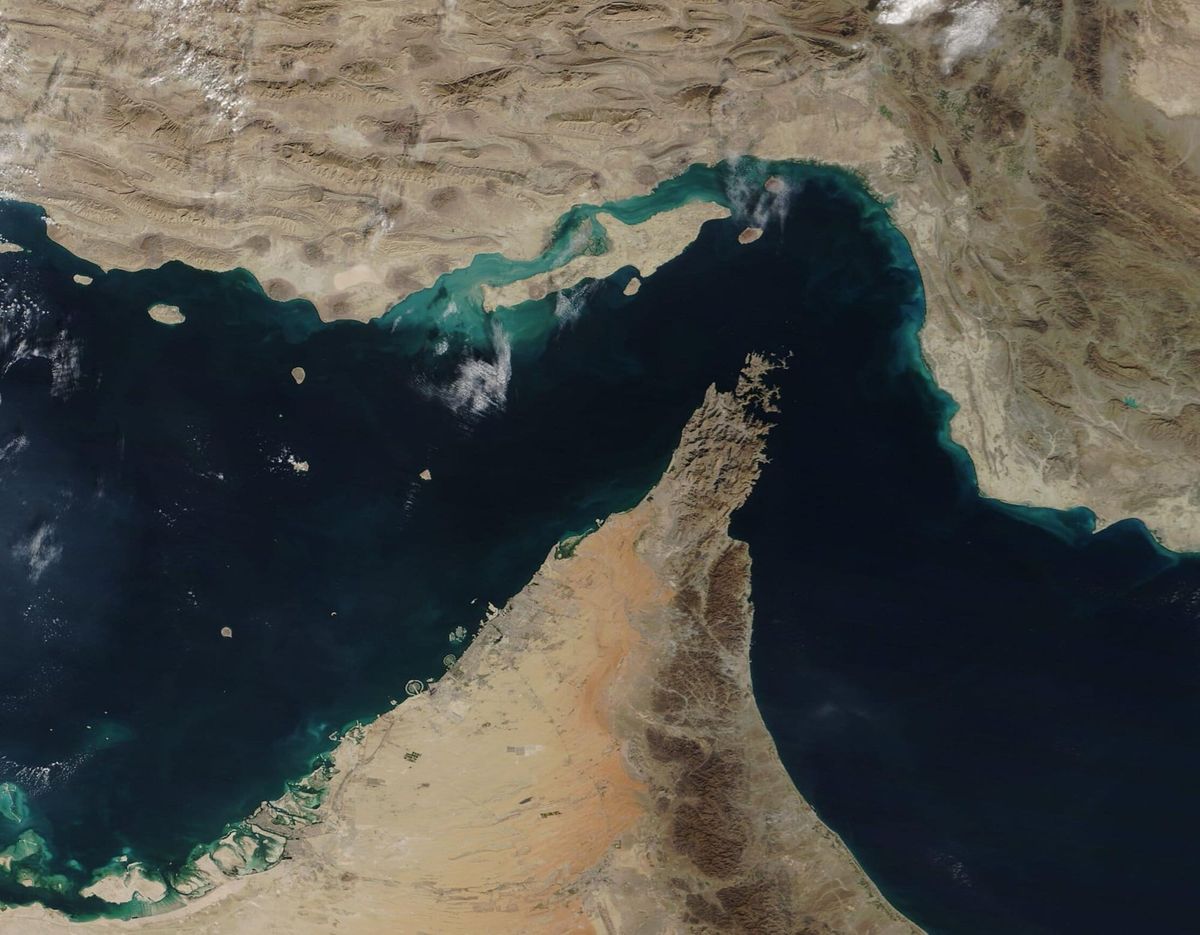
The Strait of Hormuz is a narrow sea passage between Iran and Oman. The strait connects the Persian Gulf to the Gulf of Oman and the Arabian Sea. In 2024, about 20 million barrels of oil per day moved through the strait, according to the U.S. Energy Information Administration, or EIA. That equaled about 20% of world oil use.
Why Did It Happen?
Iran lies on the north side and Oman on the south. At its narrowest, the strait is about 24 miles, or 39 kilometers, wide, according to the International Energy Agency. Yet the water is deep enough for the largest oil tankers in the world.
Oil and gas from Saudi Arabia, Iraq, Kuwait, Qatar and the United Arab Emirates pass through to reach world markets. Saudi Arabia led in crude oil, at about 5.5 million barrels per day in 2024. About one fifth of world trade in liquefied natural gas also passed through, led by Qatar, a country led by an emir.
How Does It Affect People?
Ships follow a traffic separation scheme. Its two one way lanes are each about 2 miles wide, with a 2 mile buffer between the lanes. Iran and Oman proposed the scheme, and the International Maritime Organization, the United Nations agency for shipping, adopted it in 1968.
Pipelines offer only a partial way around. Saudi Arabia's East West Pipeline can carry about 5 million barrels per day to the Red Sea port of Yanbu. A United Arab Emirates pipeline can carry 1.8 million barrels per day to Fujairah on the Gulf of Oman. The EIA calculated that only about 2.6 million barrels per day of unused pipeline space was available in a disruption. The Red Sea route has its own risk. Tankers heading to Asia pass the Bab el Mandeb Strait near Yemen. There, the Houthis began attacking ships in November 2023.
In 2024, 84% of the crude oil and 83% of the liquefied natural gas moving through the strait went to Asia. China, India, Japan and South Korea were the top buyers. Oil from the strait made up 7% of U.S. oil imports.
A disruption, even a short one, can delay supplies and raise shipping costs and world energy prices. Tension alone can move prices. In June 2025, Brent rose from 69 U.S. dollars to 74 U.S. dollars per barrel in one day, though ships were still moving, the EIA reported.
Why Does It Still Matter?
Conflict has hit the strait before. During the Iran Iraq War from 1980 to 1988, both sides attacked tankers in the Persian Gulf, known as the Tanker War. From 1987 to 1988, U.S. Navy warships escorted Kuwaiti tankers under the U.S. flag. The Naval History and Heritage Command calls it the largest naval convoy operation since World War II. On the first convoy, the tanker Bridgeton struck a naval mine laid by boats of Iran's Revolutionary Guard.
In 2026, the strait was again at the center of the U.S. and Iran war.
Sources
- U.S. Energy Information Administration, Amid regional conflict, the Strait of Hormuz remains critical oil chokepoint, June 16, 2025
- U.S. Energy Information Administration, The Strait of Hormuz is the world's most important oil transit chokepoint, for shipping lane widths
- International Energy Agency, Strait of Hormuz
- U.S. Energy Information Administration, World Oil Transit Chokepoints
- Naval War College Review, Andrew R. Marvin, Operation Earnest Will: The U.S. Foreign Policy behind U.S. Naval Operations in the Persian Gulf 1987 to 1989, Spring 2020
- Naval History and Heritage Command, H-Gram 018-1: Tanker War
- International Maritime Organization, Strait of Hormuz shipping route and Traffic Separation Scheme
- United Nations, Security Council Resolution 2722 on Houthi attacks in the Red Sea, January 10, 2024
Disclaimer
This content was researched and organized with the assistance of Super Intelligence (SI) and is intended for educational and informational purposes only. MIMS Reports strives for accuracy, but information may change over time. Readers are encouraged to verify important information using official sources and consult qualified professionals when making legal, financial, medical, or other important decisions.