Iran's Revolutionary Guard Explained
Learn what Iran's Revolutionary Guard is, how it was created and organized, who leads it, and what role it plays at sea.

What Is Iran's Revolutionary Guard?
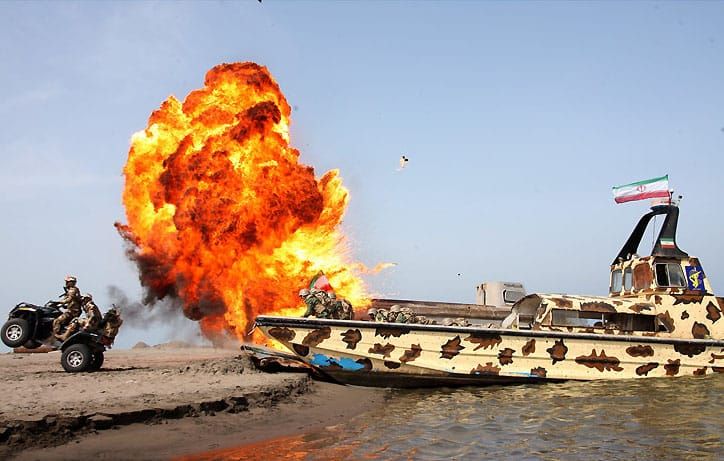
Iran's Revolutionary Guard, formally the Islamic Revolutionary Guard Corps or IRGC, is a branch of Iran's armed forces that reports to Iran's Supreme Leader. The force is separate from Iran's regular military. The force has upward of 190,000 troops, according to the International Institute for Strategic Studies. About half are drafted.
Why Did It Happen?
In 1979, the Islamic Revolution ended the rule of the shah, Iran's king. Ayatollah Ruhollah Khomeini set up the Islamic Republic of Iran. The new leaders created the Guard outside the regular army. Iran's constitution says the force exists to guard the revolution and its gains. The Iran Iraq War, from 1980 to 1988, turned the Guard into a regular fighting force with a clear chain of command.
How Does It Affect People?
Under Iran's constitution, the Supreme Leader appoints and dismisses the Guard's chief commander. The force answers directly to the Supreme Leader, bypassing Iran's elected president. The Council on Foreign Relations lists these branches:
- Ground forces based across Iran's 31 provinces and Tehran.
- Navy, about 20,000 sailors who patrol Iran's sea borders, including the Strait of Hormuz.
- Aerospace force, which runs Iran's ballistic missiles and drones.
- Quds Force, which operates outside Iran and works with armed groups such as Hamas and Hezbollah.
- Basij, a volunteer paramilitary force.
The Guard also holds business interests in banking, shipping and manufacturing, which began with rebuilding after the Iran Iraq War.
The Guard shapes Iran's security and economy, armed groups across the region and shipping in the Persian Gulf. In 1987, during the Tanker War, Guard boats laid naval mines that the tanker Bridgeton struck while escorted by the U.S. Navy. Qasem Soleimani, who led the Quds Force and built its regional partnerships, was killed by a U.S. drone strike in January 2020.
Other governments have penalized the force. The United States placed sanctions on the Quds Force in 2007 and the full Guard in 2017. In April 2019, the U.S. State Department named the Guard a Foreign Terrorist Organization. On February 19, 2026, the European Union added it to the EU list of terrorist organizations.
What Happens Next?
The Guard was a central force in the U.S. and Iran war, which began with U.S. and Israeli strikes on February 28, 2026. Its power over Iran's security, economy and regional allies keeps the Guard at the center of any future deal or conflict involving Iran.
Sources
- Council on Foreign Relations, The Islamic Revolutionary Guard Corps, 2026
- Immigration and Refugee Board of Canada, text of Article 150 of the Constitution of Iran
- Constitution of Iran, Articles 107 and 110, via the Office of the Supreme Leader
- U.S. Department of State archive, Designation of the Islamic Revolutionary Guard Corps, April 8, 2019
- Federal Register, Designation of the Islamic Revolutionary Guard Corps as a Foreign Terrorist Organization, April 15, 2019
- Council of the European Union, Council designates the Islamic Revolutionary Guard Corps as a terrorist organisation, February 19, 2026
- Naval History and Heritage Command, H-Gram 018-1: Tanker War
- International Maritime Organization, Strait of Hormuz shipping route and Traffic Separation Scheme
Disclaimer
This content was researched and organized with the assistance of Super Intelligence (SI) and is intended for educational and informational purposes only. MIMS Reports strives for accuracy, but information may change over time. Readers are encouraged to verify important information using official sources and consult qualified professionals when making legal, financial, medical, or other important decisions.