Emirs Explained
Learn what an emir is, where the title comes from, which countries are led by emirs, and what powers an emir holds at home and abroad.

What Is an Emir?
An emir is a title for a ruler, prince or commander in the Muslim world. Today, the hereditary rulers of Qatar and Kuwait hold the title and serve as heads of state. The word comes from the Arabic amir, meaning commander or prince, according to Encyclopaedia Britannica. Qatar and Kuwait spell it Amir in English.
Why Did It Happen?
In the early Muslim world, an emir was a military commander, a governor of a province or a high military official. The title is now used by the rulers of independent states. Neighboring monarchies use other titles. Saudi Arabia is led by a king, and Oman by a sultan.
How Does It Affect People?
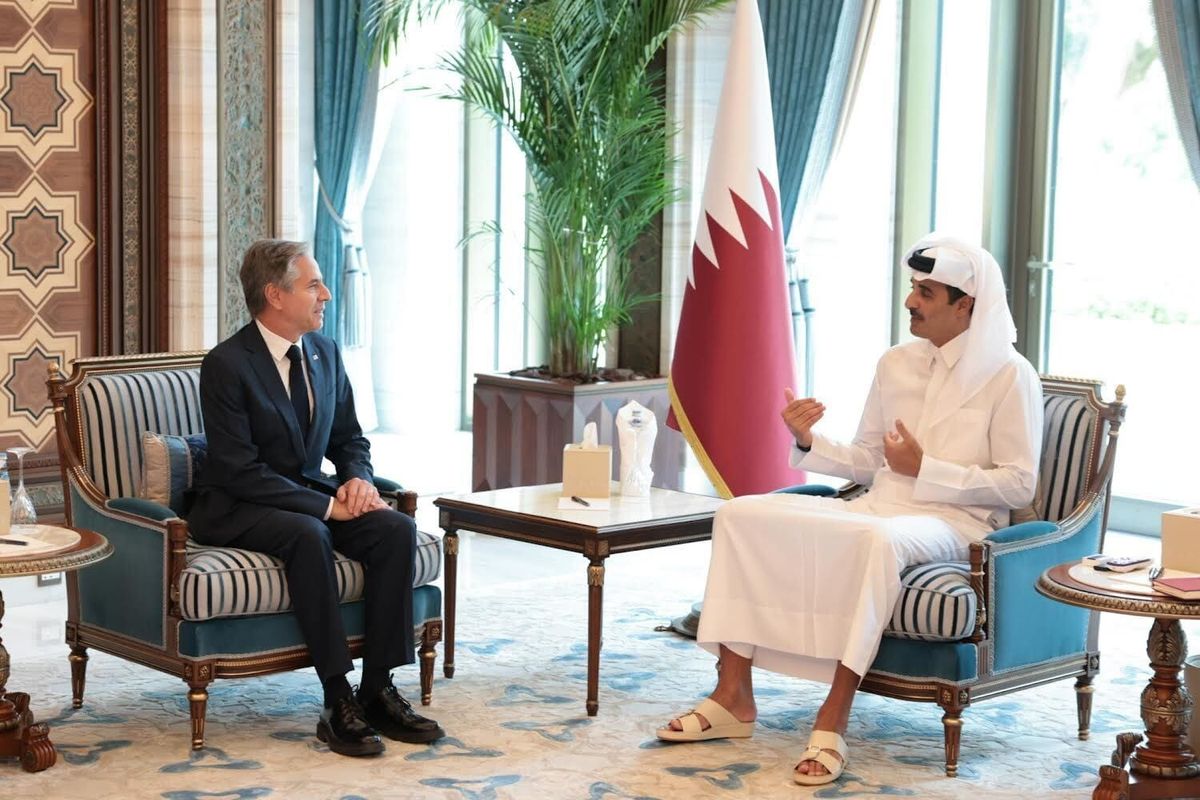
An emir's powers depend on each country's constitution. Qatar's constitution makes rule hereditary in the Al Thani family. The emir represents the state at home and abroad and is commander in chief of the armed forces. Qatar also has the Shura Council, an advisory and lawmaking body. Kuwait's constitution calls Kuwait a hereditary emirate. Only descendants of Mubarak Al Sabah, a ruler in the late 1800s and early 1900s, can inherit rule. Kuwait also has an elected National Assembly.
The United Arab Emirates is a federation of seven emirates: Abu Dhabi, Dubai, Sharjah, Ajman, Umm Al Quwain, Ras Al Khaimah and Fujairah. Each has a hereditary ruler. The seven rulers form the Federal Supreme Council, the highest constitutional authority in the UAE. On May 14, 2022, the council elected Sheikh Mohammed bin Zayed Al Nahyan, ruler of Abu Dhabi, as president.
Qatar's emir is Sheikh Tamim bin Hamad Al Thani. He took power on June 25, 2013, when his father, Sheikh Hamad bin Khalifa Al Thani, handed over rule. Kuwait's emir is Sheikh Mishal Al Ahmad Al Jaber Al Sabah, who became emir on December 20, 2023.
Emirs shape foreign affairs and energy beyond national borders. On February 29, 2020, the United States and the Taliban signed a peace agreement in Doha, Qatar's capital, with Qatar sponsoring the signing. About one fifth of world trade in liquefied natural gas moved through the Strait of Hormuz in 2024. Qatar was the largest source.
Why Does It Still Matter?
Emirs remain heads of state in two countries and rulers of the seven UAE emirates. Qatar, under its emir, has also passed messages between the United States and Iran, including during the 2026 war.
Sources
- Encyclopaedia Britannica, emir
- Qatar International Media Office, His Highness The Amir
- Amiri Diwan of Kuwait, Biography of His Highness the Amir
- UAE Government Portal, The Federal Supreme Council
- Constitution of Qatar, Articles 65 and 66, via Constitute Project
- Constitution of Kuwait, via Constitute Project
- Qatar Ministry of Foreign Affairs, Agreement for Bringing Peace to Afghanistan Signed Under Auspices of the State of Qatar, February 29, 2020
- U.S. Department of State, Agreement for Bringing Peace to Afghanistan, February 29, 2020
- U.S. Energy Information Administration, Amid regional conflict, the Strait of Hormuz remains critical oil chokepoint, June 16, 2025
Disclaimer
This content was researched and organized with the assistance of Super Intelligence (SI) and is intended for educational and informational purposes only. MIMS Reports strives for accuracy, but information may change over time. Readers are encouraged to verify important information using official sources and consult qualified professionals when making legal, financial, medical, or other important decisions.