The Joint Comprehensive Plan of Action Explained
Learn what the 2015 Iran nuclear deal required, why the United States left it in 2018, and how the deal came to an end in 2025.

What Is the Joint Comprehensive Plan of Action?
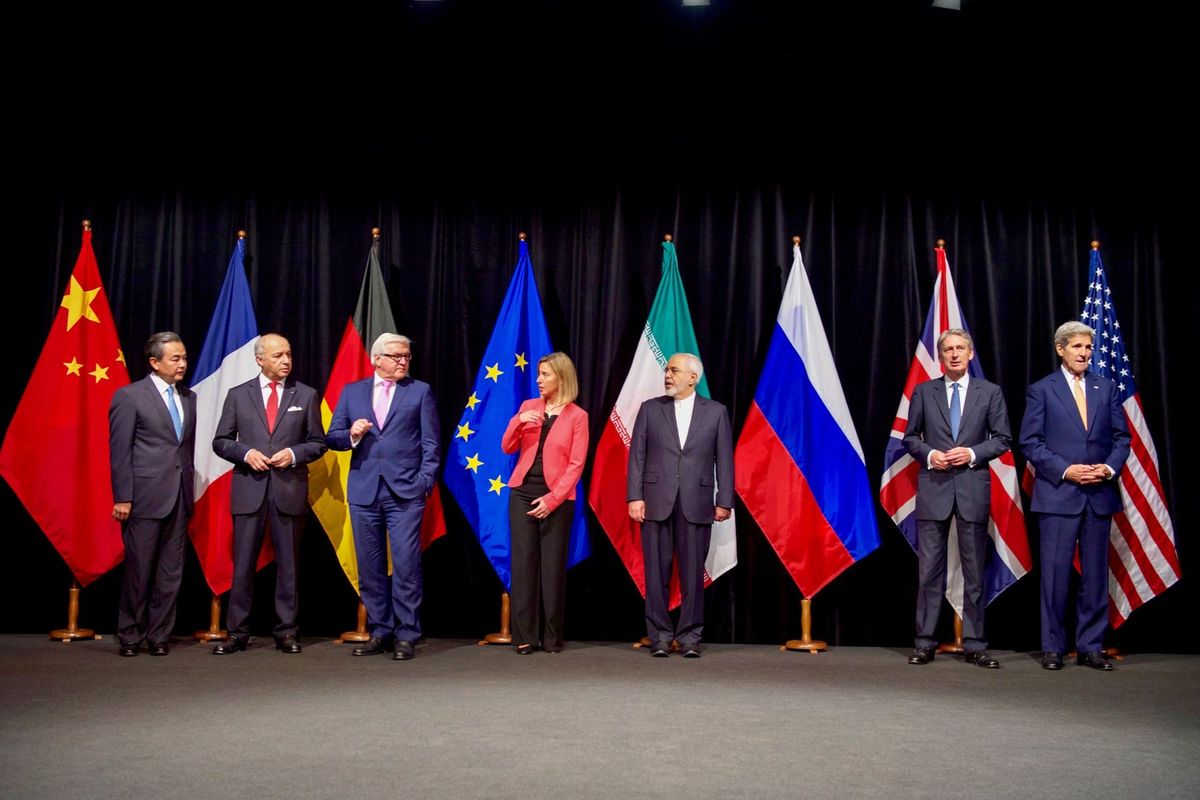
The Joint Comprehensive Plan of Action, or JCPOA, is the 2015 agreement that limited Iran's nuclear program in exchange for relief from international sanctions. It is also called the Iran nuclear deal. Iran reached the deal on July 14, 2015, in Vienna, Austria. The other parties were China, France, Germany, Russia, the United Kingdom, the United States and the European Union.
Why Did It Happen?
Countries sought limits on Iran's nuclear work, while Iran sought an end to sanctions. Iran has said its nuclear program is for peaceful uses. On July 20, 2015, the United Nations Security Council endorsed the deal in Resolution 2231. On January 16, 2016, called Implementation Day, the council ended seven earlier resolutions on Iran.
How Does It Affect People?
Iran agreed to enrich uranium to no more than 3.67% for 15 years. Iran also agreed to keep its enriched uranium stock under 300 kilograms, about 661 pounds. Iran also accepted extra monitoring by the International Atomic Energy Agency, the United Nations linked agency that inspects nuclear sites. In return, the United Nations, the European Union and the United States eased sanctions.
In the United States, the Iran Nuclear Agreement Review Act of 2015 gave the U.S. Congress a set period to review the deal. A resolution to reject it did not pass.
In May 2018, U.S. President Donald Trump withdrew the United States and restored U.S. sanctions. The administration said the deal did not cover Iran's missiles or support for armed groups, and that its limits were set to expire. Supporters said the deal kept Iran's program under strict limits and inspections.
Starting in July 2019, the agency verified that Iran was exceeding the limits. In February 2021, Iran stopped allowing the extra monitoring. In June 2025, the United States and Israel struck Iranian nuclear sites, and the agency withdrew inspectors.
What Happens Next?
France, Germany and the United Kingdom started snapback on August 28, 2025, and United Nations sanctions returned on September 27, 2025. China, Iran and Russia said in an October 18, 2025, letter that snapback was not valid. The U.S. Congressional Research Service has written that the deal is effectively no longer in force. In 2026, Iran's nuclear program became a central issue in the U.S. and Iran war.
Sources
- Joint Comprehensive Plan of Action, full text, Vienna, July 14, 2015
- U.S. Department of State archive, Joint Comprehensive Plan of Action
- Congressional Research Service, Iran's Nuclear Program and 2025 UN Sanctions Reimposition, IF11583, updated October 13, 2026
- Congress.gov, Iran Nuclear Agreement Review Act of 2015, Public Law 114-17
- U.S. Department of State, Completion of UN Sanctions Snapback on Iran, September 27, 2025
- U.S. Department of State archive, Remarks on Implementation Day, January 16, 2016
Disclaimer
This content was researched and organized with the assistance of Super Intelligence (SI) and is intended for educational and informational purposes only. MIMS Reports strives for accuracy, but information may change over time. Readers are encouraged to verify important information using official sources and consult qualified professionals when making legal, financial, medical, or other important decisions.