The 1863 Gettysburg Address Explained
On Nov. 19, 1863, Abraham Lincoln gave the Gettysburg Address. Learn why he spoke at Gettysburg, what the short speech said, and why it still matters today.

What Is the Gettysburg Address?
The Gettysburg Address is a short speech U.S. President Abraham Lincoln gave on November 19, 1863, during the American Civil War. Lincoln spoke at the opening of a national cemetery for Union soldiers killed at the Battle of Gettysburg in Pennsylvania. The speech lasted about 2 minutes. The standard text, called the Bliss copy, has 272 words.
Why Did It Happen?
Eleven Southern states left the United States between December 1860 and June 1861 and formed the Confederate States of America. Statements from South Carolina, Mississippi, Georgia and Texas named the protection of slavery as a main reason.
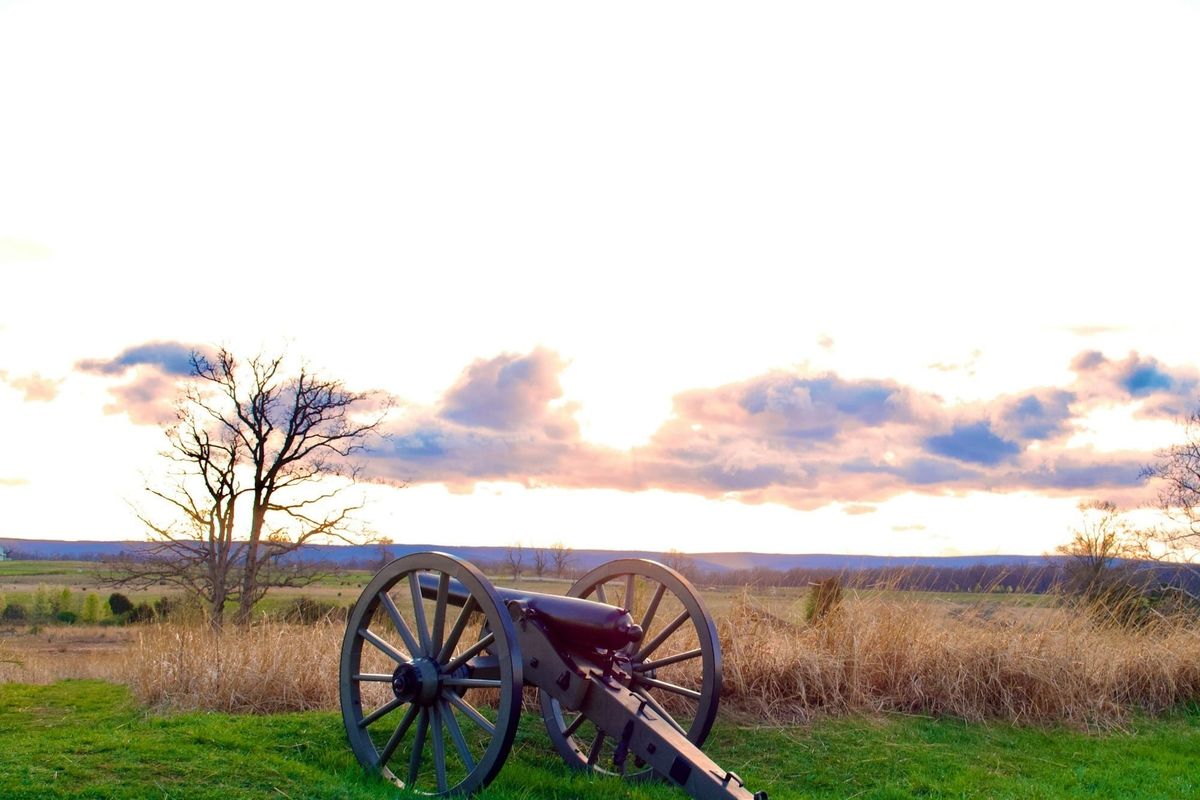
From July 1 to July 3, 1863, Union forces under General George Meade defeated the Confederate army of General Robert E. Lee at Gettysburg. The two armies suffered an estimated 51,000 casualties.
The dead were first buried in rough graves near where the soldiers fell. Local attorney David Wills led a plan for a national cemetery to rebury Union soldiers with honor. Wills invited Lincoln to speak after the main speaker, Edward Everett, and to offer brief, fitting remarks, according to the U.S. Library of Congress. Everett spoke for about 2 hours.
How Does It Affect People?
The address has three short parts.
- The past: Lincoln opened with Four score and seven years ago. The phrase means 87 years, counting back to 1776 and the Declaration of Independence. Historians read the choice as tying the nation's birth to the idea that all men are created equal.
- The present: Lincoln said the war was testing whether such a nation can long endure.
- The future: Lincoln called on the living to finish the soldiers' work. The goal was a new birth of freedom. Lincoln said the aim was that government of the people, by the people, for the people, shall not perish from the earth.
Historians connect the new birth of freedom to ending slavery. Lincoln had issued the Emancipation Proclamation on January 1, 1863, which declared enslaved people in the states fighting the Union to be free.
Reactions in 1863 split along party lines. The Springfield Republican, a Republican newspaper in Massachusetts, praised the speech. The Chicago Times, a Democratic newspaper, criticized it. The day after, Everett wrote to Lincoln. Everett said Lincoln had come closer to the central idea of the occasion in two minutes than Everett had in two hours.
Lincoln wrote out the speech by hand five known times. Each copy is named for its recipient: John Nicolay, John Hay, Edward Everett, George Bancroft and Alexander Bliss. The copies differ slightly. The Bliss copy, kept at the White House, is treated as the standard text.
Why Does It Still Matter?
The speech linked the Union cause to the equality named in the Declaration of Independence. The closing line is one of the best known descriptions of democratic government. The speech is also studied as an example of how a short text can carry lasting meaning. The full text is carved on a wall inside the Lincoln Memorial in Washington, D.C. More than 160 years later, the speech is still quoted in speeches and studied in schools.
Sources
- Library of Congress, The Gettysburg Address exhibition
- Library of Congress, The Formal Invitation from David Wills to Abraham Lincoln, November 2, 1863
- American Battlefield Trust, Gettysburg
- American Battlefield Trust, The Declaration of Causes of Seceding States
- National Archives, The Emancipation Proclamation
Disclaimer
This content was researched and organized with the assistance of Super Intelligence (SI) and is intended for educational and informational purposes only. MIMS Reports strives for accuracy, but information may change over time. Readers are encouraged to verify important information using official sources and consult qualified professionals when making legal, financial, medical, or other important decisions.