2026 Tariff Refunds Explained
The federal government is refunding tariffs the Supreme Court struck down in 2026. Learn who gets the money, how a refund works step by step, why shoppers get no refund from Customs, and what comes next.

What Are the U.S. Tariff Refunds?
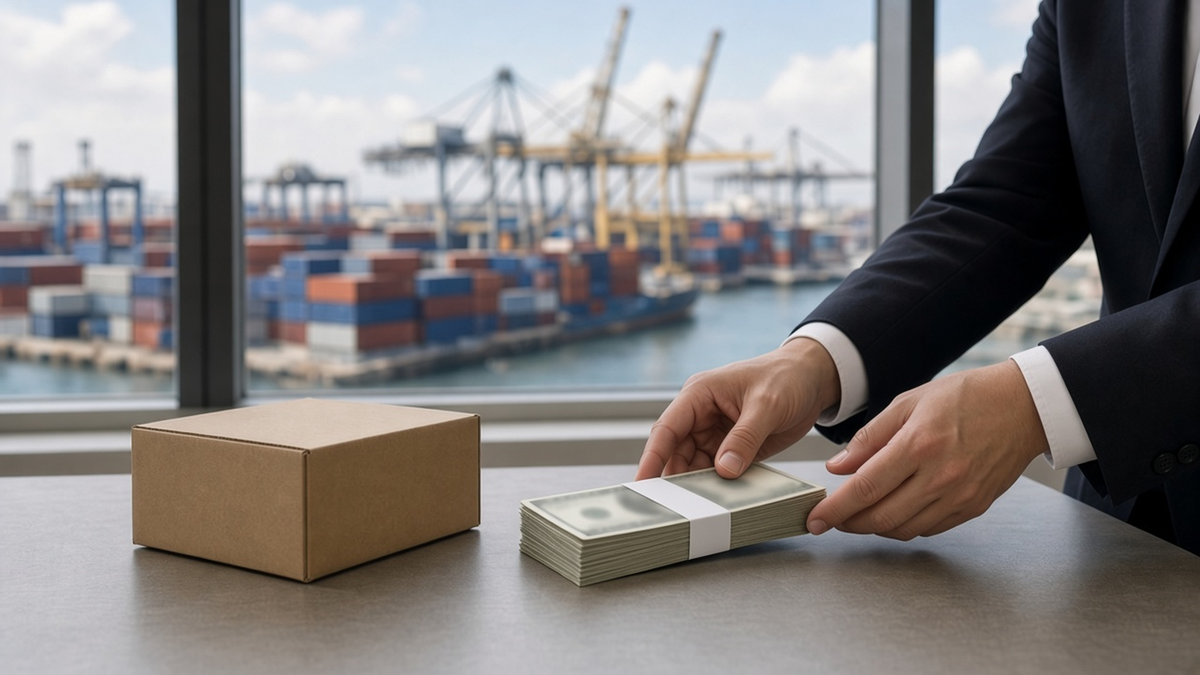
In 2026, the U.S. government began paying back tariffs that the U.S. Supreme Court ruled were never allowed. By November 5, 2026, U.S. Customs and Border Protection had sent about 128.4 billion U.S. dollars in refunds, including interest, to the U.S. Treasury for payment. The refunds go only to the companies that paid the tariffs at the border.
Why Did It Happen?
In 2025, President Donald Trump set new tariffs by executive order under the International Emergency Economic Powers Act of 1977. That law lets a U.S. President regulate trade after declaring a national emergency. The orders set 25% tariffs on goods from Canada and Mexico, 10% on goods from China and at least 10% on goods from every trading partner, with higher rates for dozens of countries.
Small businesses and 12 U.S. states sued. On February 20, 2026, in Learning Resources, Inc. v. Trump, the Supreme Court ruled 6 to 3 that the 1977 law does not allow a President to set tariffs. A power to regulate imports in an emergency does not include a power to tax imports, the Court found. The ruling did not decide how any money gets paid back.
Under Article 1, Section 8 of the U.S. Constitution, the power to tax imports belongs to Congress. A President can set tariffs only when a law passed by Congress gives that power. Tariffs set under other U.S. trade laws were not part of the case.
How Does It Affect People?
The U.S. Court of International Trade in New York oversees the refunds. On March 4, 2026, Judge Richard Eaton ordered Customs to finalize imports without the 1977 law tariffs and wrote that every importer of record who paid these tariffs is entitled to the benefit of the ruling.
Under Section 505 of the Tariff Act of 1930, an importer or customs broker uploads a list of shipments to a Customs tool called CAPE, which opened April 20, 2026. Customs removes the tariffs through liquidation and must refund the extra money with interest within 30 days. Customs tells importers to plan on 60 to 90 days after a list is accepted.
From February 2025 to February 2026, more than 330,000 importers paid about 166 billion U.S. dollars under the 1977 law, not counting interest, according to Customs. Foreign governments did not pay these tariffs and get no refunds. A Federal Reserve Bank of New York study found that nearly 90% of the cost of the 2025 tariffs fell on U.S. companies and shoppers.
Shoppers who paid higher prices get no refund from the government, because a shopper paid a store, not Customs. No U.S. law tells a company what to do with a refund, and companies made different choices. UPS and FedEx, which paid tariffs on packages sent by others, set up websites where those customers can ask for the charges back. Burlington Stores said it planned to use a 55 million U.S. dollar refund for lower prices. TJX, owner of TJ Maxx and Marshalls, set aside 167 million U.S. dollars of a 463 million dollar refund for worker pay and bonuses. Shoppers have sued sellers such as Stanley Black and Decker and Five Below for a share.
What Happens Next?
Importers that never sued are covered by a class action, Freestyle World, Inc. v. U.S. Customs and Border Protection, which the court approved in October 2026. On November 13, 2026, the court said the case paused the two year deadline to sue for class members. The class has asked for full refunds with interest.
The court set December 2026 dates for a Customs progress report, a closed settlement conference and a government answer to the class request. Importers also say CAPE turned away thousands of shipments over code errors and have asked the court for help. A court has not decided whether shoppers have a legal right to any of the money.
Sources
- Supreme Court of the United States, Learning Resources, Inc. v. Trump, No. 24 1287, February 20, 2026
- Federal Register, U.S. Customs and Border Protection, Court Ordered Refunds Under the International Emergency Economic Powers Act Worksheet, 91 FR 63299, October 5, 2026
- U.S. Customs and Border Protection, Declaration of Brandon Lord in the Freestyle World class action, Court of International Trade, November 10, 2026
- U.S. Customs and Border Protection, Declaration of Brandon Lord in Atmus Filtration, Inc. v. United States, Court of International Trade, March 6, 2026
- Federal Reserve Bank of New York, Liberty Street Economics, Who Is Paying for the 2025 U.S. Tariffs?, February 12, 2026
- Congressional Research Service, Supreme Court Rules Against Tariffs Imposed Under IEEPA
- U.S. Court of International Trade, Order in the Freestyle World class action, November 13, 2026
- U.S. Court of International Trade, Scheduling Order in the Freestyle World class action, November 9, 2026
- Freestyle World motion for a class relief order, Court of International Trade, November 10, 2026
- U.S. Court of International Trade, Order amending the March 5, 2026 refund order, March 20, 2026
- U.S. Customs and Border Protection, IEEPA Duty Refunds
- U.S. Customs and Border Protection, CAPE Trade Information Notice, updated November 4, 2026
- 19 U.S.C. 1505, Section 505 of the Tariff Act of 1930
- Reuters, Judge orders US Customs to process refunds on illegal Trump tariffs, March 4, 2026
- Roll Call, Court process kicks off for tariff refunds, March 6, 2026
- The TJX Companies, Inc., Third Quarter Fiscal 2027 results, SEC Form 8K exhibit 99.1, November 18, 2026
- ProPublica, Corporations Are Using Trump Tariff Refunds on Bonuses Rather Than Reimbursing Consumers, November 16, 2026
- Fortune, TJ Maxx parent company is spending one third of its $463 million in tariff refunds on bonuses, November 21, 2026
- International Trade Today, Plaintiffs: CBP Should Develop Process for Refunding Entries Rejected by CAPE, November 20, 2026