The 1963 JFK Assassination Explained
Learn what happened in Dallas on November 22, 1963, what the Warren Commission found, and how it changed the presidency.

What Was the JFK Assassination?
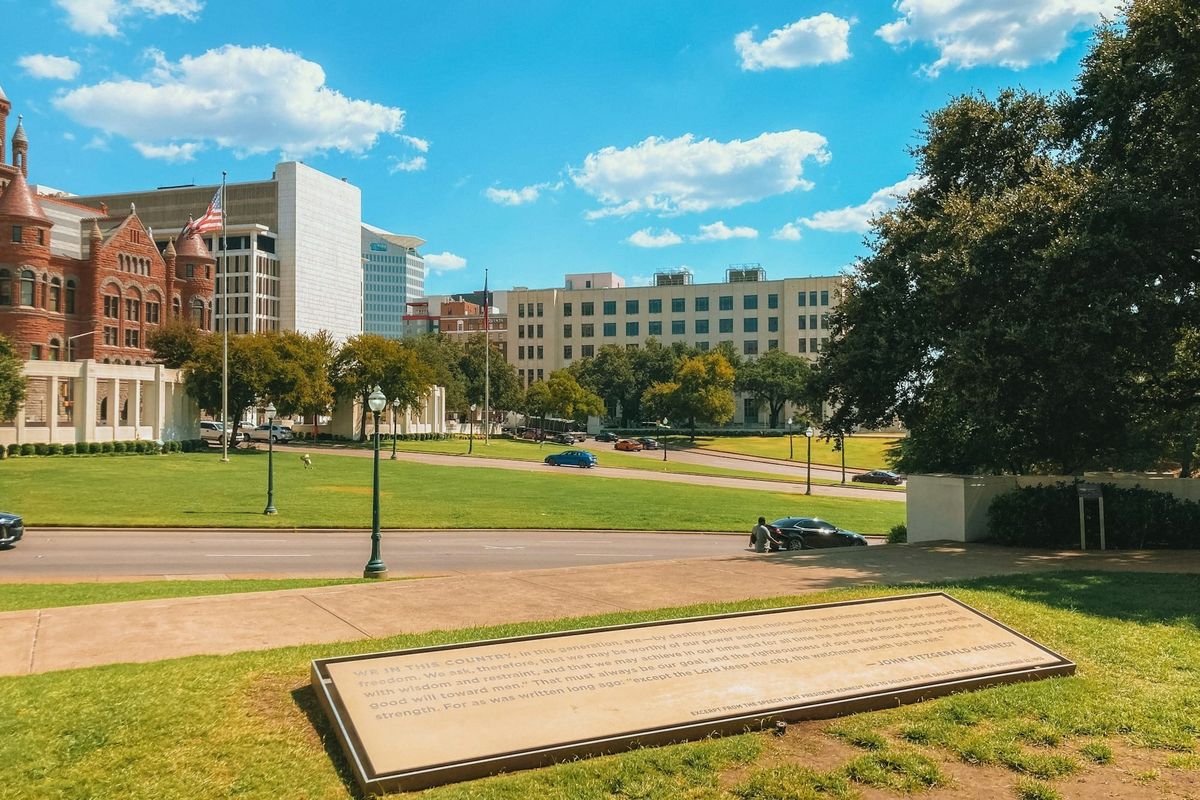
The JFK assassination was the killing of John F. Kennedy, the 35th President of the United States, in Dallas, in the U.S. state of Texas, on November 22, 1963. Kennedy was shot at about 12:30 PM local time while riding in an open car in a line of cars through Dealey Plaza. He was pronounced dead at Parkland Memorial Hospital at about 1 PM, at age 46. Texas Governor John Connally was also seriously wounded but survived.
Why Did It Happen?
Kennedy was in Texas on a political trip, guarded by the U.S. Secret Service, the U.S. agency that protects the President. Police arrested Lee Harvey Oswald, a 24 year old former U.S. Marine. Oswald worked at the Texas School Book Depository, a building that overlooked the route. Oswald was also charged with killing Dallas police officer J.D. Tippit. In 1963, killing a president was not a crime under U.S. national law, so Oswald was charged under Texas law.
Oswald denied shooting anyone. On November 24, 1963, Jack Ruby, a Dallas nightclub owner, shot and killed Oswald on live television. Because Oswald died before a trial, no court ever decided his case.
How Does It Affect People?
On November 29, 1963, President Lyndon B. Johnson created a commission led by Chief Justice Earl Warren, known as the Warren Commission. The U.S. Congress then passed Public Law 88 202, giving it the power to subpoena witnesses and evidence.
The commission had power to find facts and report, but not to charge anyone or hold a trial. Its September 1964 report found that Oswald acted alone and fired from a sixth floor window of the book depository. It found no evidence that Oswald or Ruby was part of a conspiracy.
From 1976 to 1979, the U.S. House Select Committee on Assassinations took a new look. It agreed that Oswald shot Kennedy but said Kennedy was probably killed as a result of a conspiracy. That view rested on a police radio tape that the committee said held the sound of a second shot. In 1982, a National Academy of Sciences panel found the sounds came about one minute after the shooting. No government investigation has named another shooter.
Vice President Lyndon B. Johnson took the oath of office aboard Air Force One that afternoon. At the time, Article II of the U.S. Constitution said the powers of the office pass to the Vice President. It did not clearly say whether the Vice President became President.
The assassination led to three lasting changes.
- A national crime: Public Law 89 141, signed in 1965, made it a crime under U.S. national law to kill, kidnap or attack the President or Vice President. The FBI investigates these crimes.
- Protection: The Secret Service added staff and training and changed how agents plan trips, including greater use of armored cars.
- The 25th Amendment: Ratified in 1967, it says the Vice President becomes President if the President dies, resigns or is removed. It also sets rules for filling an empty vice presidency and for when a President cannot do the job.
Why Does It Still Matter?
In 1992, the U.S. Congress passed the President John F. Kennedy Assassination Records Collection Act of 1992, Public Law 102 526. It created a collection of more than 6 million pages at the U.S. National Archives and required the records to be made public. The law let presidents delay specific records if release causes serious harm, and for years parts stayed withheld. In January 2025, President Donald Trump signed Executive Order 14176 calling for full release. In March 2025, the National Archives released the records still withheld for classification. More than 60 years later, the assassination remains a subject of research and public debate.
Sources
- National Archives, Warren Commission Introduction
- National Archives, Report of the Warren Commission, Chapter 1
- Federal Register, Executive Order 11130, November 29, 1963
- Public Law 88-202, Senate Joint Resolution 137, December 13, 1963
- National Archives, Report of the House Select Committee on Assassinations
- National Academies, Report of the Committee on Ballistic Acoustics, 1982
- Public Law 89-141, August 28, 1965
- 18 U.S.C. 1751
- National Archives, Constitution Amendments 11 to 27
- National Constitution Center, Interpretation: The Twenty Fifth Amendment
- Congress.gov, S.3006, President John F. Kennedy Assassination Records Collection Act of 1992, Public Law 102-526
- Federal Register, Executive Order 14176, January 23, 2025
- National Archives, JFK Assassination Records
- U.S. Secret Service, Timeline of Our History