The 2001 9/11 Terrorist Attack Explained
Learn what happened during the September 11 attacks, who carried them out, why they occurred, and how 9/11 changed the United States.

What Was the 9/11 Terrorist Attack?
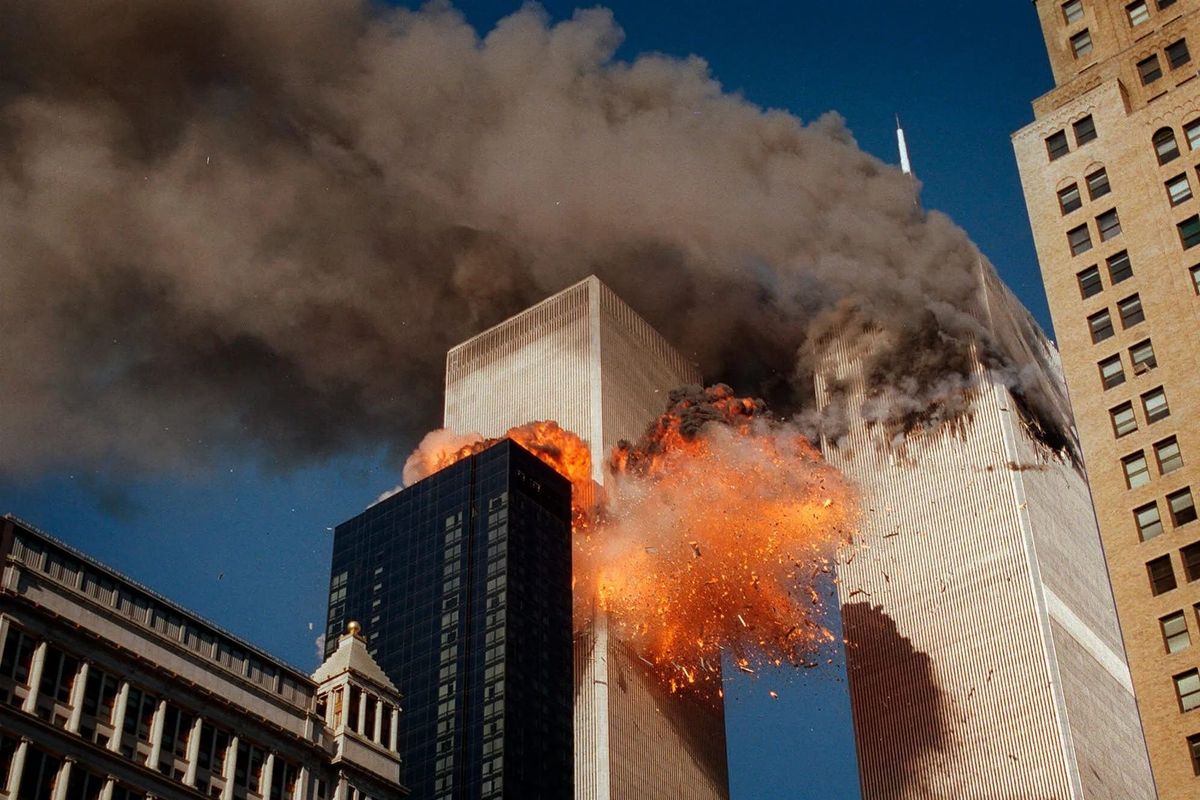
The September 11 attacks, known as 9/11, were coordinated terrorist attacks against the United States on Tuesday, September 11, 2001. Nineteen hijackers took control of four passenger airplanes. Two planes hit the World Trade Center in New York City, one hit the Pentagon in Arlington, Virginia, and one crashed near Shanksville, Pennsylvania.
The attacks killed 2,977 victims, not counting the 19 hijackers. It remains the deadliest terrorist attack in history.
Why Did It Happen?
Members of al Qaeda carried out the attacks. Osama bin Laden led the group, and Khalid Sheikh Mohammed was a central planner. The plot took years to prepare, and several hijackers took flight lessons in the United States.
Al Qaeda leaders named the presence of U.S. troops in Saudi Arabia, U.S. support for Israel and U.S. actions in the Middle East as reasons for the attacks. These views did not represent Islam or Muslims as a whole, and Muslim leaders and communities around the world condemned the attacks.
Security at the time was weaker. Screening at airports was less strict, cockpit doors were not reinforced, and the hijackers used the planes themselves as weapons. The 9/11 Commission later found that U.S. agencies had failed to share and act on warning signs.
How Does It Affect People?
The attacks unfolded in less than two hours:
- 8:46 AM: American Airlines Flight 11, from Boston to Los Angeles, hit the North Tower of the World Trade Center.
- 9:03 AM: United Airlines Flight 175, also from Boston to Los Angeles, hit the South Tower.
- 9:37 AM: American Airlines Flight 77, from Washington Dulles International Airport to Los Angeles, hit the Pentagon, the headquarters of the U.S. Department of Defense.
- 9:59 AM: The South Tower collapsed.
- 10:03 AM: United Airlines Flight 93, from Newark, New Jersey, to San Francisco, crashed near Shanksville after passengers and crew fought back.
- 10:28 AM: The North Tower collapsed.
Passengers and crew used Airfones and cell phones to reach family members and officials. On Flight 93, those calls revealed the other attacks, and the people on board tried to retake the plane. Investigators concluded that the hijackers of Flight 93 planned to strike a target in Washington, D.C.
The 2,977 victims included 246 people on the planes, 2,606 in and around the World Trade Center and 125 at the Pentagon. Among the dead were 343 New York City firefighters and dozens of police officers. Thousands of rescue and recovery workers later became sick from dust and toxic materials at the sites.
Why Does It Still Matter?
The attacks changed U.S. security and foreign policy. In October 2001, after the Taliban government of Afghanistan refused to hand over bin Laden, the United States and its allies began a war in Afghanistan. U.S. forces left in 2021, nearly 20 years later. U.S. forces killed bin Laden in Pakistan in 2011.
Congress passed the USA PATRIOT Act in October 2001, expanding government powers to investigate terrorism. The Transportation Security Administration, or TSA, was created in 2001 to run airport screening, and cockpit doors were strengthened. The Department of Homeland Security was created in 2002. Emergency agencies also improved how police, firefighters and medical workers communicate during a crisis.
The National September 11 Memorial and Museum stands at the World Trade Center site in New York. Memorials also stand at the Pentagon and near Shanksville. Each year, ceremonies on September 11 honor the victims.
Sources
- National Commission on Terrorist Attacks Upon the United States, The 9/11 Commission Report, 2004
- FBI, 9/11 Investigation
- National September 11 Memorial and Museum, 9/11 FAQs
- National Park Service, Flight 93 National Memorial
- U.S. Department of Homeland Security, Creation of the Department of Homeland Security