The 1945 to 1946 Nuremberg Trials Explained
On Nov. 20, 1945, the main Nuremberg trial of Nazi leaders opened in Germany. Learn why Allied nations held the trials, what the verdicts were, and how Nuremberg shaped international law.

What Were the Nuremberg Trials?
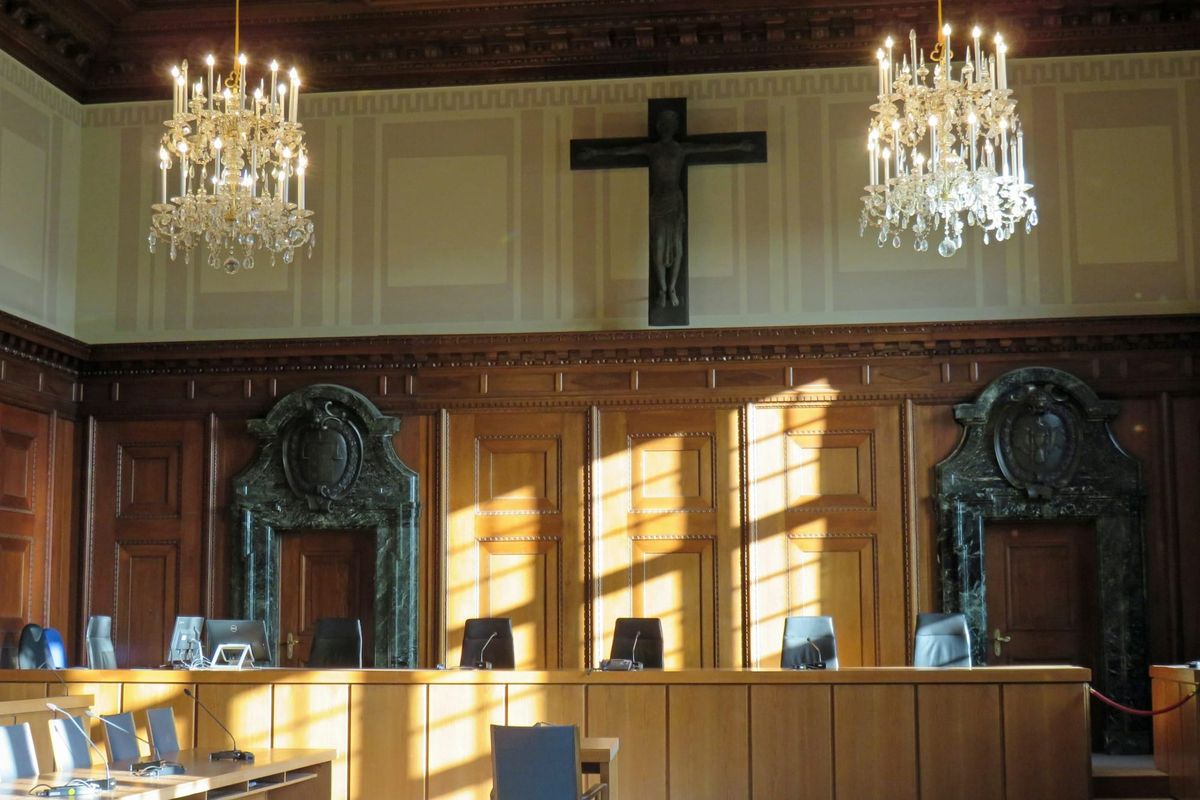
The Nuremberg trials were court cases held in Nuremberg, Germany, after World War II. Leaders of Nazi Germany were tried for crimes before and during the war. The best known trial opened on November 20, 1945, before the International Military Tribunal. The United States, the United Kingdom, France and the Soviet Union created that tribunal.
Why Did It Happen?
Nazi Germany started World War II in Europe and carried out the Holocaust.
Nazi Germany and its allies also killed millions of people who were not Jewish. The museum counts about 3.3 million Soviet prisoners of war and about 1.8 million non Jewish Polish civilians. It also counts at least 250,000 Roma and 250,000 to 300,000 people with disabilities, among other groups.
As the war ended in 1945, the four powers chose not to punish captured leaders without a trial. Instead, the leaders faced formal charges, evidence and defense lawyers. Nuremberg was chosen in part because its Palace of Justice survived the bombing and had a prison attached. The city had also hosted large Nazi Party rallies.
How Does It Affect People?
Germany surrendered without conditions in May 1945, and on June 5 the four powers took over supreme authority in Germany. On August 8, 1945, the four powers signed the London Agreement, with the London Charter attached. The Charter created the tribunal, listed the crimes and set the trial rules. Nineteen more countries later joined the agreement. In its judgment, the tribunal explained its power. Germany's surrender let the winning countries make laws for Germany, and the Charter used that right.
Each of the four powers supplied judges and prosecutors. U.S. Supreme Court Justice Robert H. Jackson led the American prosecution, which relied on Nazi government documents, films and witnesses. The defendants faced four charges:
- Conspiracy: Taking part in a shared plan to commit the other crimes.
- Crimes against peace: Planning, starting and fighting wars of aggression, meaning wars started without a lawful reason such as self defense.
- War crimes: Breaking the laws of war, such as killing or abusing prisoners of war or civilians.
- Crimes against humanity: Murder, mass killing, slavery, forced removal and persecution of civilians on a wide scale.
The tribunal indicted 24 leading Nazi officials and 6 Nazi organizations. Twenty two people were tried, including Hermann Göring, Rudolf Hess and Joachim von Ribbentrop. Martin Bormann was tried in absentia. Adolf Hitler, Heinrich Himmler and Joseph Goebbels had died by suicide before the war ended.
On October 1, 1946, the tribunal found 19 defendants guilty and acquitted 3. Twelve were sentenced to death, 3 to life in prison and 4 to terms of 10 to 20 years. Ten were executed on October 16, 1946. Göring took his own life the night before.
The United States then held 12 more trials in Nuremberg for doctors, judges, industrialists, military commanders and others. Courts across Europe tried other accused Nazis where the crimes took place. In Asia, a tribunal with judges from 11 countries tried Japanese leaders in Tokyo from 1946 to 1948.
Why Does It Still Matter?
The tribunal ruled that people, not only governments, can be punished for international crimes. It also ruled that following orders does not clear a person of guilt. In 1950, the United Nations International Law Commission wrote these rules down as the Nuremberg Principles. In 1948, the United Nations adopted the Convention on the Prevention and Punishment of the Crime of Genocide.
Later courts followed. Courts for crimes in the former Yugoslavia and Rwanda began in 1993 and 1994. The International Criminal Court was created by a treaty called the Rome Statute, adopted in 1998.
The trials also faced criticism. Critics called the trials victors' justice. Only the losing side was tried, and Soviet judges sat in judgment even though Soviet forces had also committed abuses. Soviet prosecutors tried to blame Germany for the 1940 Katyn Forest killings of Polish officers, which Soviet forces carried out. Critics also asked whether starting a war was clearly a crime before 1945. The tribunal pointed to the Kellogg Briand Pact of 1928, in which Germany and other countries gave up war as a tool of national policy.
Sources
- United States Holocaust Memorial Museum, International Military Tribunal at Nuremberg
- United States Holocaust Memorial Museum, How Many People did the Nazis Murder?
- Avalon Project, Yale Law School, London Agreement of August 8th 1945
- Avalon Project, Yale Law School, Charter of the International Military Tribunal
- Avalon Project, Yale Law School, Judgment: The Law of the Charter
- Avalon Project, Yale Law School, Declaration Regarding the Defeat of Germany and the Assumption of Supreme Authority, June 5, 1945
- University of Oslo Faculty of Law, Agreement for the Prosecution and Punishment of Major War Criminals of European Axis, list of ratifications
- William A. Schabas, The Katyn Forest Massacre and the Nuremberg Trial, Middlesex University
- Auschwitz Birkenau State Museum, Trials of SS men from the Auschwitz Concentration Camp garrison
- The National WWII Museum, Tokyo War Crimes Trial
Disclaimer
This content was researched and organized with the assistance of Super Intelligence (SI) and is intended for educational and informational purposes only. MIMS Reports strives for accuracy, but information may change over time. Readers are encouraged to verify important information using official sources and consult qualified professionals when making legal, financial, medical, or other important decisions.