The 1989 Fall of the Berlin Wall Explained
Learn why the Berlin Wall was built, how it fell in 1989, and how its fall helped end the Cold War.

What Was the Fall of the Berlin Wall?
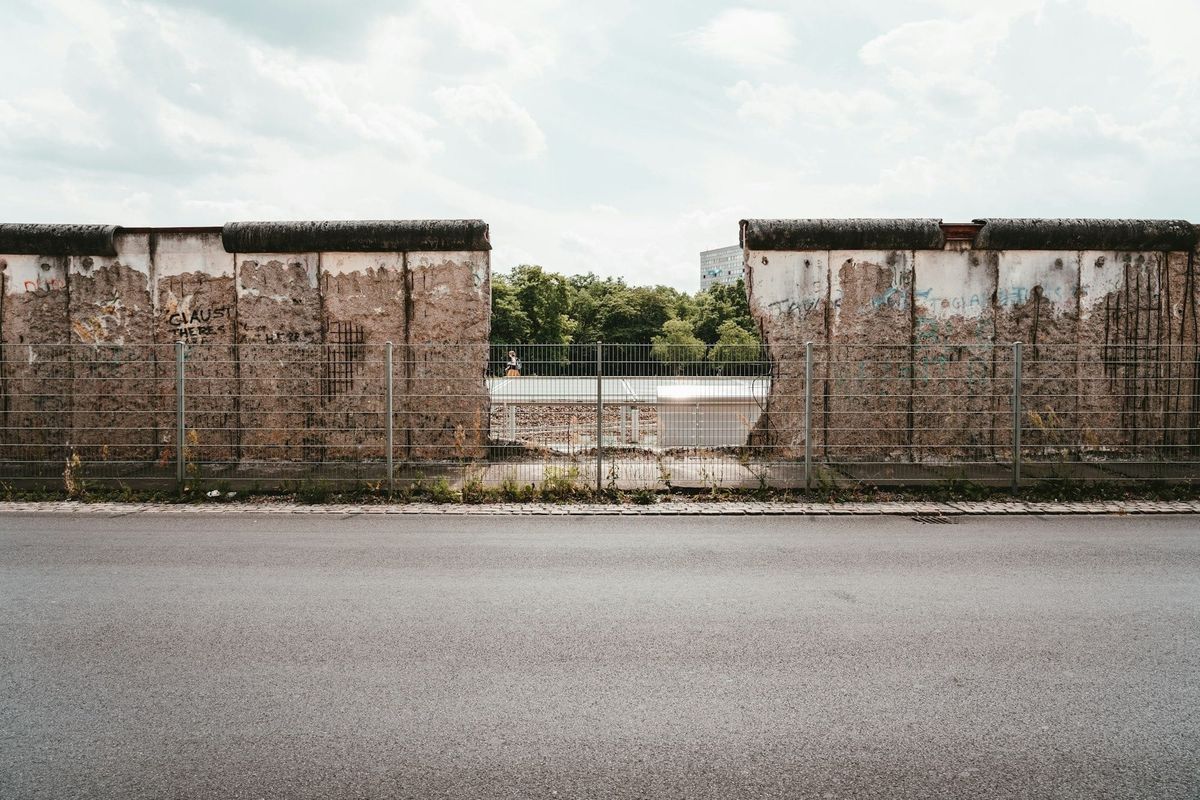
The Berlin Wall was a guarded barrier that divided the city of Berlin, Germany, from 1961 to 1989. Communist East Germany built the wall to stop its people from leaving for West Berlin. On the night of November 9, 1989, East German officials opened the border crossings, and crowds poured through. The event became a lasting symbol of the end of the Cold War.
Why Did It Happen?
After Nazi Germany lost World War II in 1945, the United States, the United Kingdom, France and the Soviet Union divided Germany into four zones. Berlin sat deep inside the Soviet zone and was also split four ways. In 1949, the Western zones became West Germany, and the Soviet zone became East Germany, run by a communist party allied with the Soviet Union.
During the 1950s, millions of people left East Germany, with Berlin as the main escape route. On August 13, 1961, East German forces began closing the border around West Berlin with barbed wire. The barrier grew into concrete walls, watchtowers and a guarded strip of land.
How Does It Affect People?
After Mikhail Gorbachev became the Soviet leader in 1985, he introduced reforms called glasnost and perestroika. The Soviet Union grew less willing to use force to keep communist governments in power. In 1989, Poland held partly free elections and Hungary opened its border with Austria. Large peaceful protests spread across East Germany, and longtime leader Erich Honecker was replaced in October.
On November 9, 1989, East German official Günter Schabowski announced new travel rules on television. Asked when the rules took effect, he said, as far as he knew, immediately. The rules had not been meant to start that night. Thousands of East Berliners went to the border, and late that night guards at the Bornholmer Strasse crossing opened the gate.
The wall split families, friends and neighbors for more than 28 years. According to the Berlin Wall Foundation, at least 140 people died at the wall or in connection with the border system from 1961 to 1989. The dead included people trying to escape, people who were not fleeing and border soldiers.
The wall also became a world symbol of the split between East and West. U.S. President John F. Kennedy spoke in West Berlin in 1963 in support of the city's residents. In 1987, U.S. President Ronald Reagan, at the Brandenburg Gate, called on Gorbachev to tear down the wall.
Why Does It Still Matter?
The opening led to fast change. East Germany held its first free parliamentary elections in March 1990. East and West Germany reunified on October 3, 1990, now marked as German Unity Day. The Soviet Union dissolved in December 1991, an event treated as the end of the Cold War. Sections of the wall remain as memorials, including the Berlin Wall Memorial on Bernauer Strasse and the East Side Gallery.
Sources
- Office of the Historian, U.S. Department of State, The Berlin Airlift, 1948 to 1949, on the four occupation zones
- Office of the Historian, U.S. Department of State, The Collapse of Communism in Eastern Europe, on Gorbachev's reforms and 1989 in Poland and Hungary
- Office of the Historian, U.S. Department of State, The Collapse of the Soviet Union, on December 1991
- Berlin.de, Opening and fall of the Berlin Wall, on Schabowski and Bornholmer Strasse
- Berlin Wall Foundation, Victims at the Berlin Wall, on the at least 140 deaths
- Berlin Wall Foundation, East Side Gallery
- Miller Center, University of Virginia, June 26, 1963: Ich bin ein Berliner Speech
- Ronald Reagan Presidential Library, Remarks on East West Relations at the Brandenburg Gate in West Berlin, June 12, 1987
- Federal Agency for Civic Education, Germany, Die erste und letzte freie DDR Volkskammerwahl, in German, on the March 18, 1990 election
- Federal Agency for Civic Education, Germany, Deutsche Einheit am 3. Oktober 1990, in German
Disclaimer
This content was researched and organized with the assistance of Super Intelligence (SI) and is intended for educational and informational purposes only. MIMS Reports strives for accuracy, but information may change over time. Readers are encouraged to verify important information using official sources and consult qualified professionals when making legal, financial, medical, or other important decisions.