Daylight Saving Time Explained
Learn why clocks change twice a year, who does not observe daylight saving time, and where the Sunshine Protection Act stands.

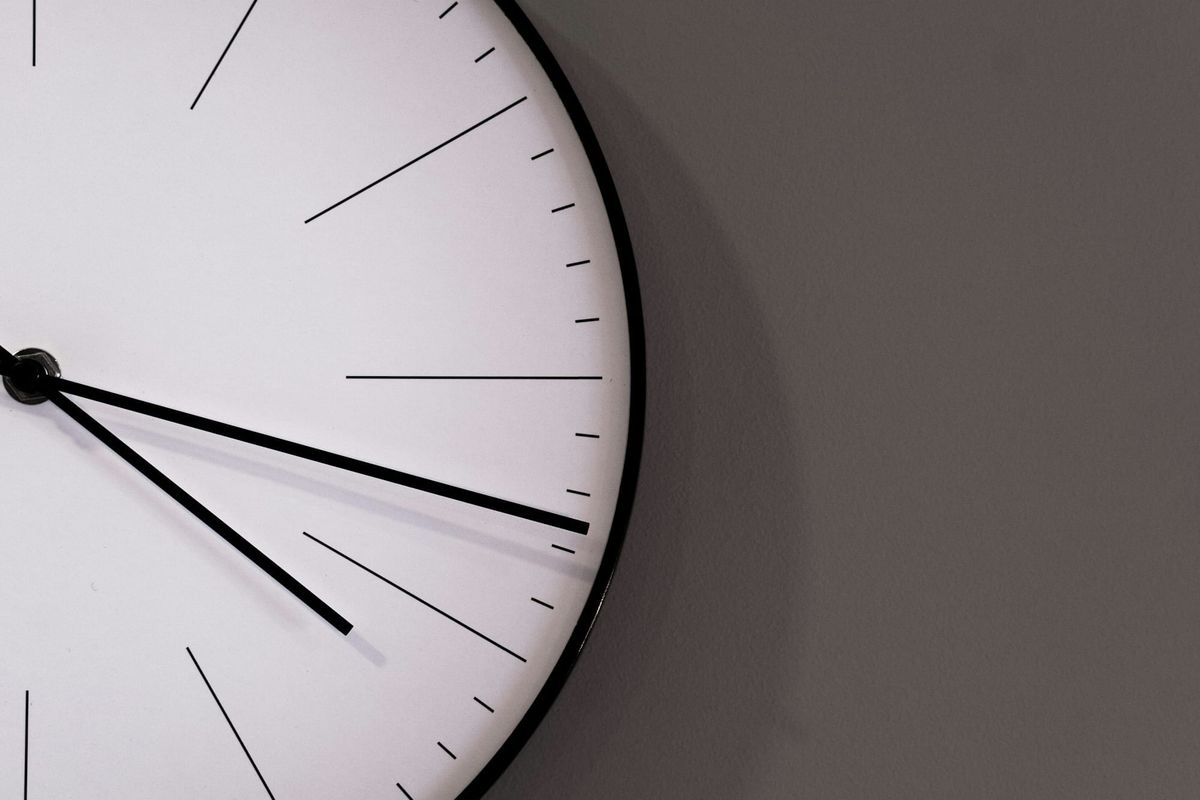
Daylight saving time ended today, Sunday, November 1, 2026, at 2:00 a.m. local time. In most of the United States, clocks moved back 1 hour to 1:00 a.m., returning to standard time until spring.
What Is Daylight Saving Time?
Under daylight saving time, people follow the same clock-based schedules, but those schedules happen 1 hour earlier compared to the sun. For example, during DST the sun reaches its highest point in the sky around 1:00 p.m. instead of around noon.
Standard Time
Standard time is the regular time for each time zone. Most of the United States uses standard time from early November to mid-March.
"Spring Forward, Fall Back"
Many people use the phrase "spring forward, fall back" to remember which way the clocks move. In the spring, clocks move forward 1 hour and most people lose 1 hour of sleep. In the fall, clocks move back 1 hour and most people gain 1 hour.
When Does Daylight Saving Time Start and End?
Federal law sets the dates. Daylight saving time begins at 2:00 a.m. local time on the second Sunday in March and ends at 2:00 a.m. local time on the first Sunday in November.
The Energy Policy Act of 2005 set the current schedule. It extended DST by about 4 weeks, starting in 2007, by moving the start from the first Sunday in April to the second Sunday in March and moving the end from the last Sunday in October to the first Sunday in November.
Upcoming Dates
- November 1, 2026: Daylight saving time ended and clocks moved back 1 hour.
- March 14, 2027: Daylight saving time begins again and clocks move forward 1 hour, unless Congress changes the law before then.
How Did Daylight Saving Time Begin?
The United States did not always have time zones or daylight saving time. Before the late 1800s, towns generally set their own local time based on the sun.
Railroads and Time Zones
To reduce confusion, U.S. and Canadian railroads adopted 4 standard time zones in 1883: Eastern, Central, Mountain, and Pacific.
Key Moments in U.S. History
- 1918: The Standard Time Act, also called the Calder Act, created official time zones and the first national daylight saving time. It followed Germany and other European countries, which began using DST during World War I to save fuel.
- 1919: Congress repealed national DST, overriding a veto from President Woodrow Wilson. Some states and cities kept using it.
- 1942 to 1945: Congress put the country on year-round DST during World War II. It was known as "War Time."
- 1966: The Uniform Time Act set national start and end dates for DST and allowed states to exempt themselves.
- 1974 to 1975: During an energy crisis caused by the 1973 oil embargo, Congress tried year-round DST again as a trial. Congress later restored standard time for the winter months of 1974 to 1975.
- 1986: Congress moved the start of DST to the first Sunday in April.
- 2005: The Energy Policy Act of 2005 set today's schedule, which took effect in 2007.
Who Does Not Observe Daylight Saving Time?
Most states observe DST. According to the U.S. Department of Transportation and the Congressional Research Service, these places do not:
- Hawaii, which exempted itself in 1967.
- Most of Arizona, which exempted itself in 1968. The Navajo Nation, which includes parts of Arizona, Utah, and New Mexico, does observe DST.
- American Samoa.
- Guam.
- The Northern Mariana Islands.
- Puerto Rico.
- The U.S. Virgin Islands.
What Is the Sunshine Protection Act?
Where the Bill Stands
The House of Representatives passed the bill, H.R. 139, on July 14, 2026, by a vote of 308 to 117. The Senate received it on July 15, 2026, and sent it to the Senate Committee on Commerce, Science, and Transportation. As of November 1, 2026, the Senate has not voted on it. To become law, the bill must pass the Senate and be signed by the President.
President Donald Trump has said he supports the bill. In October 2026, Senate Majority Leader John Thune said there was "no clear path forward or consensus on it yet." If the bill does not pass by the end of the current Congress in January 2027, it would have to be introduced again.
Earlier Attempts
A similar bill, the Sunshine Protection Act of 2021, passed the Senate by unanimous consent in March 2022, but the House did not vote on it.
Other Proposals
Other bills in Congress take different approaches. The Sunshine for Our Kids Act of 2026 would end DST and keep the country on standard time all year.
The States
According to the Congressional Research Service, 19 states have passed laws to adopt year-round DST if Congress allows it: Alabama, Colorado, Delaware, Florida, Georgia, Idaho, Louisiana, Maine, Minnesota, Mississippi, Montana, Oklahoma, Oregon, South Carolina, Tennessee, Texas, Utah, Washington, and Wyoming. Bills to adopt year-round standard time have been introduced in many states.
What Are the Arguments For and Against Changing the Clocks?
People disagree about whether the country should keep changing clocks, stay on DST all year, or stay on standard time all year. Research on the effects of DST has found mixed results.
Arguments for Year-Round Daylight Saving Time
Supporters say more evening daylight could encourage shopping, outdoor activities, and recreation, and would end the disruption of changing clocks twice a year.
Arguments for Year-Round Standard Time
The American Academy of Sleep Medicine and other scientific groups support permanent standard time. They say morning light better matches the body's natural clock. Some senators have raised safety concerns about children going to school in the dark on winter mornings under year-round DST.
Health
Some studies have linked the spring clock change to short-term increases in heart attacks, strokes, and fatal car crashes, often connected to lost sleep. Other studies have not found the same effects. A 2026 review of the research found that the health effects of DST are "neither uniformly harmful nor uniformly beneficial."
Energy
Saving energy was one of the original reasons for DST. In 2008, the U.S. Department of Energy found that the longer DST schedule reduced electricity use by about 0.03% in 2007, about 0.02% of total U.S. energy use. Other studies have found small savings, no savings, or slight increases depending on location.
What Happens Next?
Unless Congress changes the law, most of the United States will stay on standard time until 2:00 a.m. on Sunday, March 14, 2027, when clocks move forward 1 hour. Readers can follow the Sunshine Protection Act at Congress.gov.
Disclaimer
This content was researched and organized with the assistance of Super Intelligence (SI) and is intended for educational and informational purposes only. While we strive for accuracy, information may change over time. Readers are encouraged to verify important information using official sources and consult qualified professionals when making legal, financial, medical, or other important decisions.